Coral, Turtles, and Whale Sharks: The Complete Diver's Guide to Lankayan Island
A protected coral island in the Sulu Sea with three reasons to visit: year-round reef diving, a sea turtle hatchery, and a seasonal whale shark migration.
Lankayan Island is a small coral cay in the Sulu Sea, 50 kilometres northeast of Sandakan on the coast of Sabah, Malaysian Borneo. The island sits within the Sugud Islands Marine Conservation Area (SIMCA), a protected sanctuary established in 2001 that effectively ended commercial fishing pressure on the surrounding reefs. Over more than two decades, that protection has produced a reef ecosystem of genuine health: fringing coral and scattered patch reefs rising from a sandy seabed at 30 to 35 metres up to reef crests at 12 to 15 metres, warm clear water, and a marine population that rewards every style of diving. Lankayan offers three experiences in one: year-round reef diving above healthy coral and abundant reef fish, a sea turtle nesting and hatchery programme that peaks between June and September, and a whale shark migration that passes through from March to May.
At a Glance
| Best time to visit | March to October |
| Whale shark season | March to May |
| Turtle hatchlings | June to September |
| Closed | January and February (monsoon season) |
| Water temperature | 26°C - 30°C year-round |
| Getting there | 1.5-hour speedboat from Sandakan |
The Reef Environment
SIMCA's two decades of protection are immediately evident underwater. The reef system here is shallow and varied — a continental shelf environment of fringing reefs and outlying patch reefs, each with its own character. The waters are fed by nutrient-rich river systems draining from the Bornean mainland, which underpins the extraordinary density of life across the reef. Visibility runs between 10 and 25 metres during the diving season, and the richness of the water column is expressed in numbers rather than turbidity: dense reef fish populations, a high concentration of invertebrates, and a remarkable density of macro life across the coral structures. The sandy flats between the reef systems harbour jawfish — notable for incubating their egg clutches entirely inside their mouths — as well as prawn gobies operating their characteristic symbiotic partnerships with blind partner shrimp.
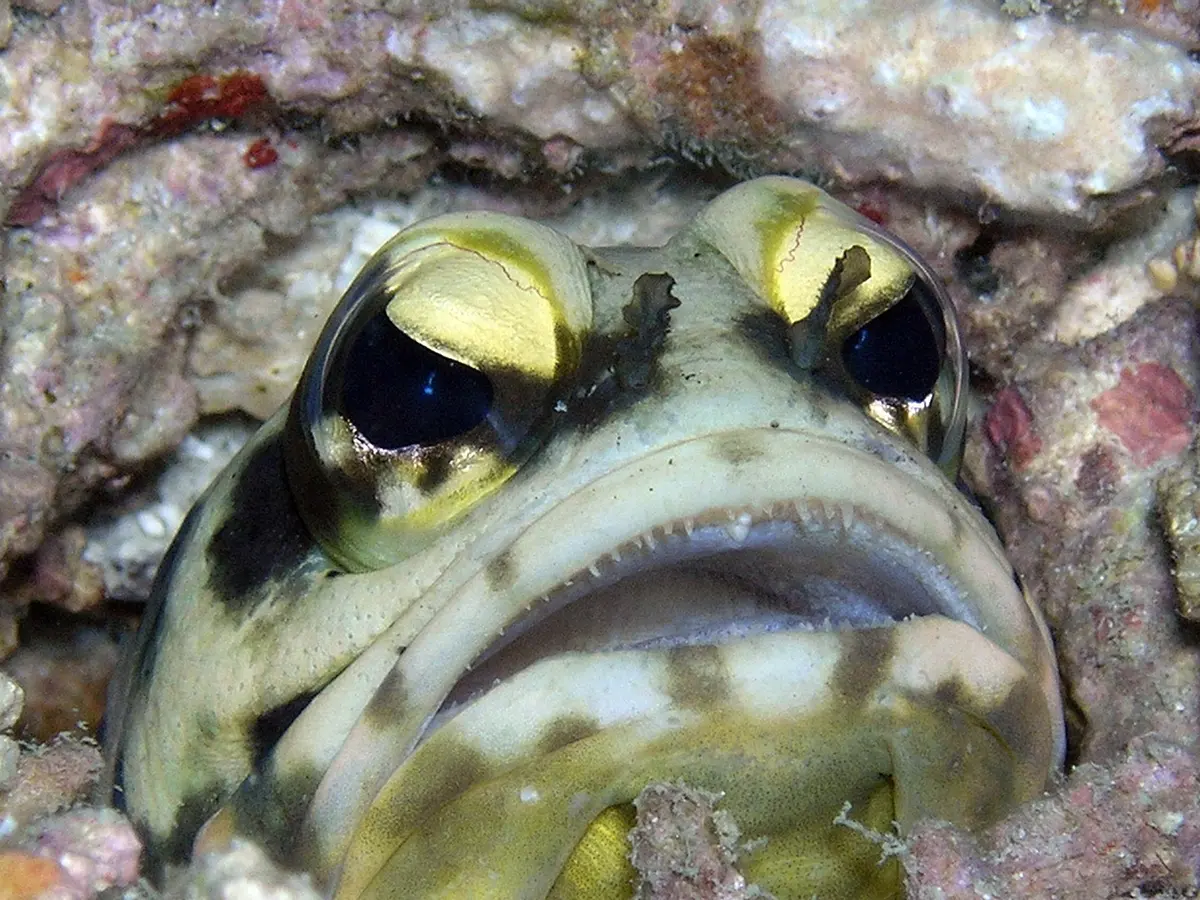
Lankayan's most common encounters — turtles cruising the shallows, reef sharks on the outer sandy flats, and schooling fish above the wrecks and reef crests — speak to a reef where the protection is working.
Diving the Natural Reefs
The Supermarket Group operates between 5 and 15 metres: a cluster of coral mounds interspersed with narrow sandy alleys that create a dense, labyrinthine structure. Staghorn and lettuce corals dominate the formations, and their complex surfaces shelter ghost pipefish, frogfish, porcelain crabs, and decorator crabs. Bottom times at this depth are generous, which suits the deliberate, close-range observation the site rewards.
The Channel Group sits along a natural topographic depression in the seafloor, with reef lines rising from a 30-metre sandy base to a 15-metre crest. The channel formation funnels nutrient-rich currents through the structures, drawing mackerels and jacks that move between the deeper water and the shelf reefs.
Katcing Star lies approximately 4.6 kilometres southwest of the island — the most distant of the outlying sites, and among the most rewarding. Large encrusted coral blocks at 12 metres are heavily colonised by hydroids that attract a high density of feeding nudibranchs. The barrel sponges here host the pink squat lobster (Lauriea siagiani), a specialist commensal species worth locating. The sandy flats surrounding the reef are resting ground for leopard sharks, bamboo sharks, and blacktip reef sharks.
Lost World, known locally as the Dikosi Group, occupies the peripheral edge of the reef system. Large, isolated coral heads rise abruptly from a 30-metre seabed, surrounded by active rubble fields colonised by gobies, symbiotic shrimp, and octopuses. The site receives less traffic than the reefs closer to the island, which produces more settled and observable marine behaviour. Bamboo sharks are a regular sighting here.
The Wrecks
The three artificial wrecks function as permanent fish aggregation points, each with its own character.
The Lankayan Wreck rests between 20 and 30 metres, its superstructure entirely reclaimed and now heavily encrusted with soft tree corals and sponges. Dense schools of trevallies and barracudas rotate continuously above the main deck. The shaded interior cavities harbour ghost pipefish and frogfish that use the low-light environment to their advantage.
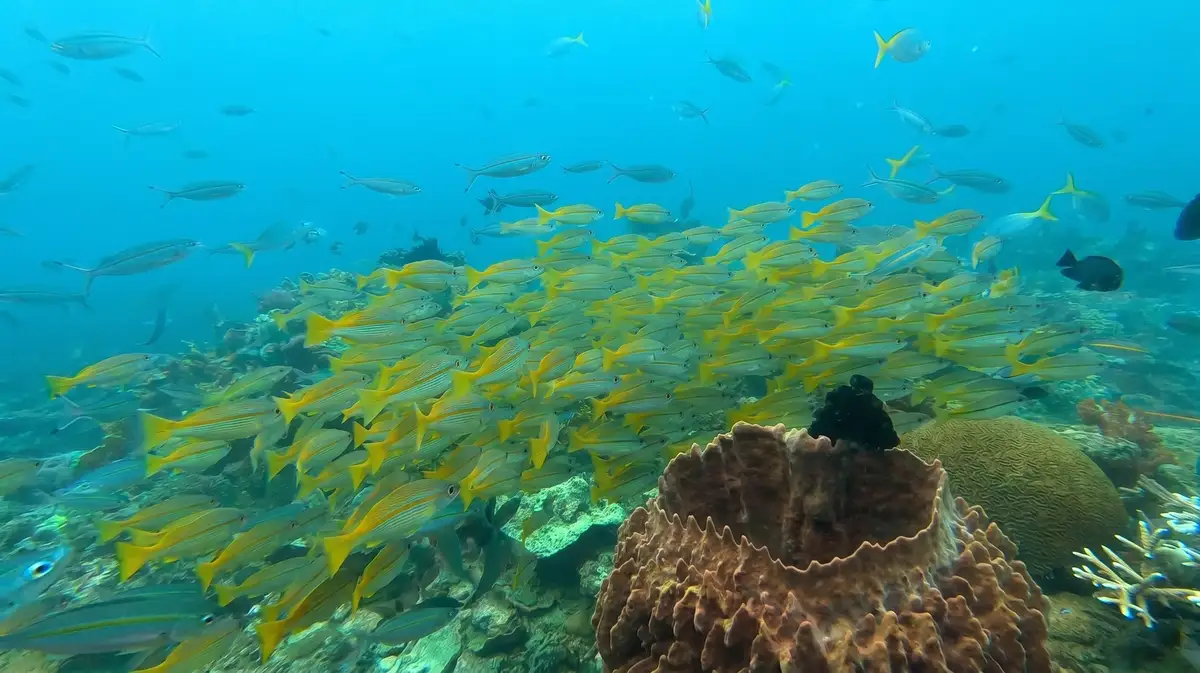
The Mosquito Wreck carries a historical dimension the other sites cannot match. Part of Japan's wartime Mosquito Fleet, the vessel rests at 24 to 30 metres with its bow gun still largely intact — an atmospheric detail that adds to an already productive dive. The surrounding water column draws schooling barracudas and jacks, and between March and May, whale sharks have been observed passing through the open water adjacent to the wreck.
The Jetty Wrecks sit shallower, between 10 and 15 metres, directly off the island's jetty. Juvenile batfish congregate around the upper sections, and the high ambient light makes this the most accessible of the three. Blue-spotted rays, cuttlefish, and scorpionfish are regularly found around the structures. Night dives here are particularly productive: frogfish become more active, and lionfish position themselves around the jetty pillars.
At Dusk: Mandarin Valley
Mandarin Valley operates on a different schedule to the rest of the site roster. A shallow coastal reef peaking at 5 to 12 metres, it is dived almost exclusively at dusk, when mandarin fish emerge from the coral substrate to perform their mating rituals. The display lasts only a matter of minutes, and the combination of vivid colour and precise timing makes this one of the more sought-after dive experiences in Sabah. Positioning matters — guides who know the site will place divers correctly before the light drops.
Whale Sharks
Between March and May, migrating whale sharks transit through the sanctuary. Sightings during this window are documented with sufficient regularity to make the timing meaningful for divers specifically targeting them, though no encounter can be guaranteed. The open water adjacent to the Mosquito Wreck is among the more reliable vantage points. These are large animals — commonly observed at 8 to 10 metres in length — and the shallow shelf setting makes for an unusually close encounter relative to open-ocean whale shark sites.
Sea Turtles
Lankayan sits within a recognised Sea Turtle Corridor and functions as a critical nesting ground for both Green and Hawksbill turtles. In-water encounters are common throughout the diving season; the island's resident turtle population is large enough that sightings on the shallow reef crests and sandy slopes are routine rather than exceptional.
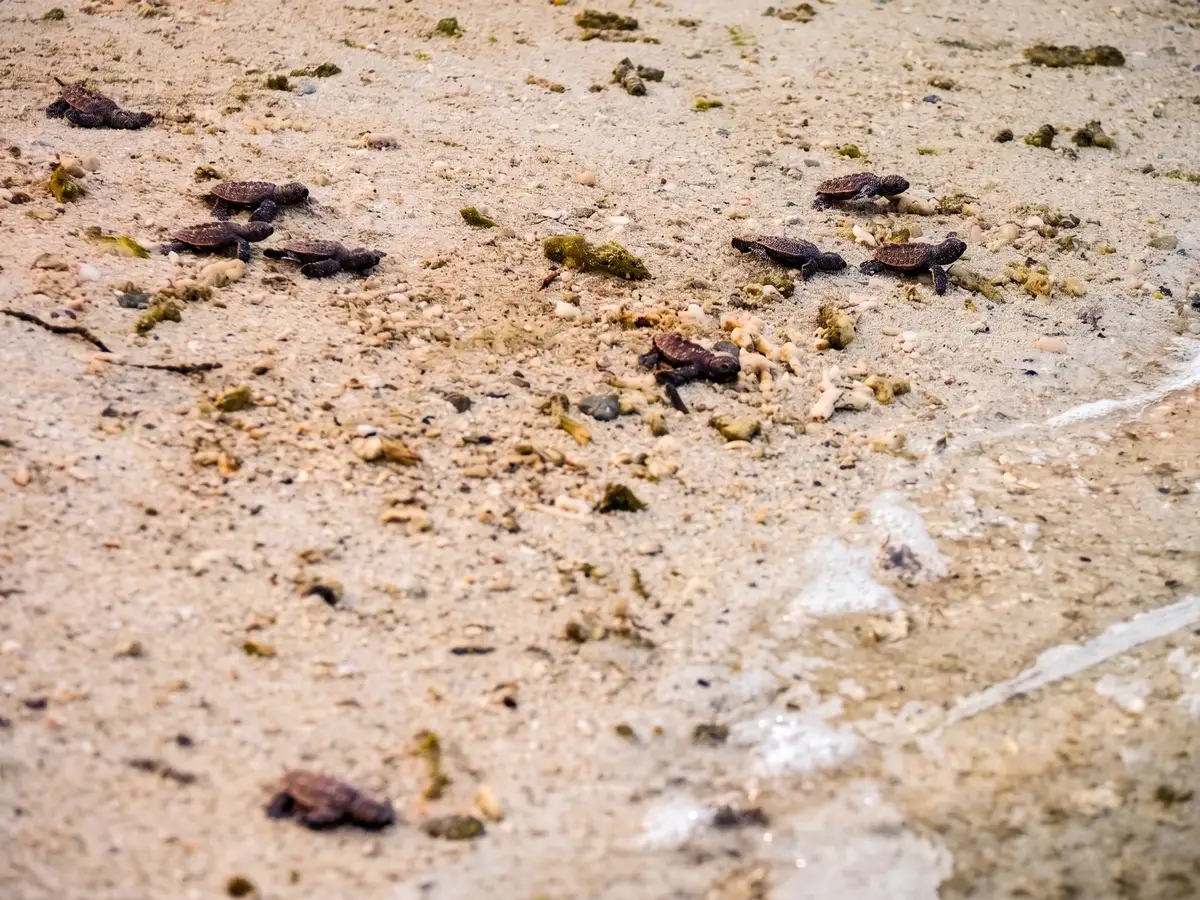
The island operates a dedicated turtle hatchery, collecting and protecting eggs from nesting females to maximise hatch rates against natural predation. Between June and September, the hatchery enters its most active period. Guests can observe newly hatched turtles emerging from the sand and making their first descent into the Sulu Sea — a quiet, memorable experience that sits naturally alongside the diving rather than competing with it.
When to Visit
The diving season runs from March to October, when the Sulu Sea is calm and visibility holds between 10 and 25 metres. Divers targeting whale sharks should plan for March to May; those wanting to observe turtle hatchlings should aim for June to September. A visit in May or early June catches the tail end of the whale shark window and the start of the turtle nesting season — the closest thing to a single trip that covers both.
November and December occupy a transitional period: some diving is possible, but conditions are variable and less reliable than during the dry season proper. The resort closes entirely in January and February, when the Northeast Monsoon brings sustained rain and sea states that make the speedboat transfer from Sandakan unsafe. Bookings for these months are not available.
Water temperature stays between 26°C and 30°C throughout the open season.
Getting There
Lankayan is reached by speedboat from Sandakan on the northeastern Sabah coast, a journey of approximately 1.5 hours under normal sea conditions. Sandakan is served by domestic flights from Kota Kinabalu, Sabah's main international hub, with flight times under an hour. Most international visitors route through Kota Kinabalu before connecting onward to Sandakan.
Planning Your Trip
Lankayan Island Dive Resort is the only resort on the island and the single point of access for all diving, accommodation, and the turtle hatchery programme. Because the island has limited capacity and both the whale shark and turtle seasons attract advance bookings, preferred dates — particularly from March to September — fill well ahead of time; the resort we work with here can confirm availability and outline the full package before you finalise travel arrangements to Sandakan.