Diving in Malaysia
Sabah, on the northeastern coast of Malaysian Borneo, contains three entirely distinct dive destinations within a single state. All three sit within the Coral Triangle. All three are under active protection — Sipadan has been a marine reserve since 1933, Lankayan sits within a conservation area that ended commercial fishing in 2001, and Tun Sakaran is the largest marine park in the Celebes Sea. Each is built on different geology, sustains a different marine inventory, and serves a different kind of diver. We are based in Kota Kinabalu, and we have dived all three.
Sipadan is the anchor of the region — Malaysia's only oceanic island, a volcanic cone rising from a seafloor 600 metres below the surface, and one of the most consistently rated dive sites on earth. The resorts that serve Sipadan are based on the neighbouring continental shelf islands of Mabul and Kapalai, making the full itinerary a combination of open-ocean walls and close-focus macro diving across two very different reef environments. Lankayan, 400 kilometres to the northeast, is a protected coral cay in the Sulu Sea with year-round reef diving, a sea turtle hatchery, and a seasonal whale shark migration. Tun Sakaran Marine Park, 45 minutes from Semporna, is the most varied of the three — a flooded volcanic caldera with unique mesh reefs, rare Black Coral Gardens, and outer continental shelf channels with manta rays and hammerheads.
Destinations
Sipadan, Mabul & Kapalai
Sipadan is Malaysia's only oceanic island — a volcanic pinnacle rising from 600 metres of open ocean, with walls that drop vertically from reef flats into the abyss. Its reef holds more than 550 species of hard coral and 3,000 species of reef fish. Green and hawksbill turtles are present in numbers that exceed almost anywhere else on earth, moving unhurriedly across the reef flat as a constant presence rather than a highlight sighting. At Barracuda Point, chevron barracuda form slow rotating columns in open water; bumphead parrotfish, grey reef sharks, and occasional hammerheads and thresher sharks work the deeper profiles. Sipadan operates under a strict daily permit quota of 252 divers, allocated through resort packages — Advanced Open Water certification is a non-negotiable requirement.
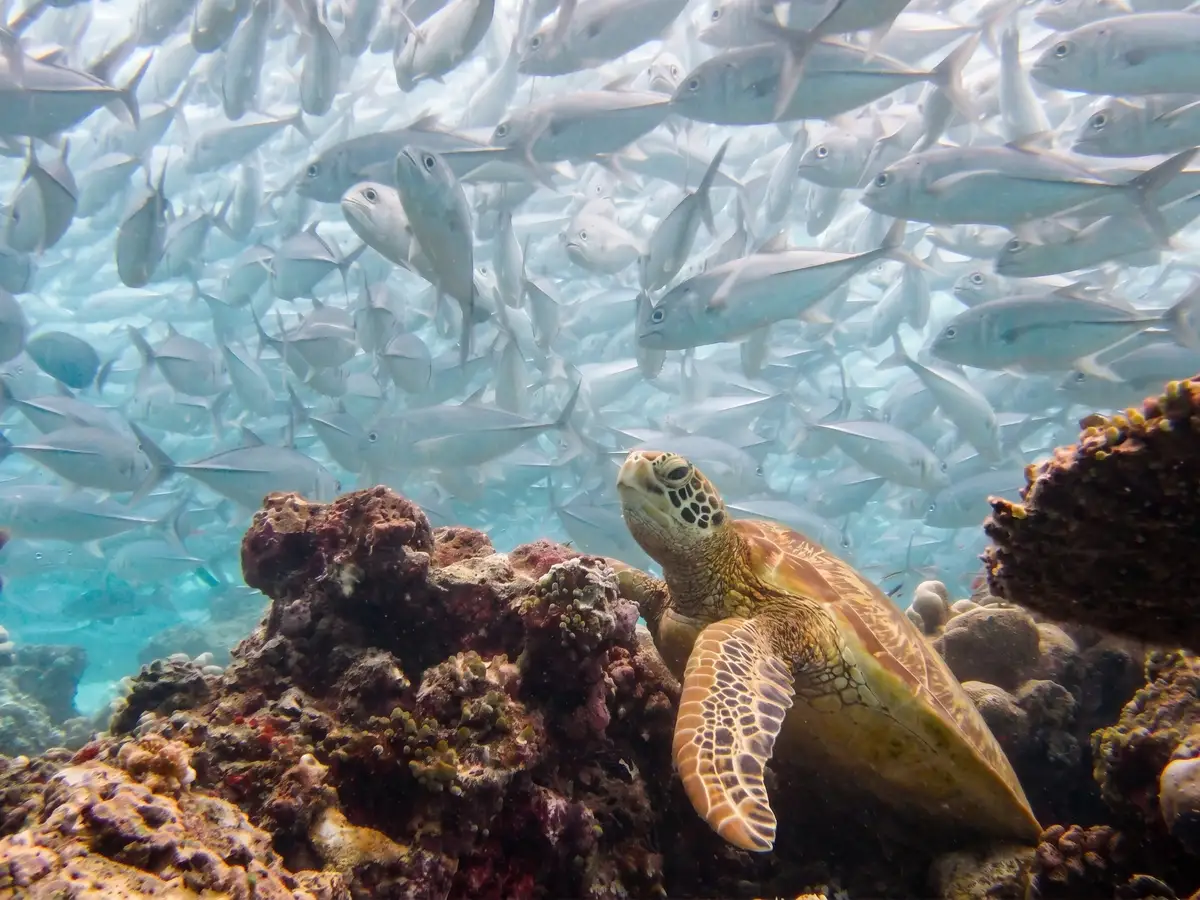
Sipadan permit days are allocated months in advance through the resorts we work with, and the dates that suit most travel windows go first. See the resorts we work with in Sipadan and check permit availability before fixing your travel dates.
Resorts base their guests on the neighbouring islands of Mabul and Kapalai, 15 to 20 minutes by boat. Mabul is a world-class macro diving destination — frogfish, flamboyant cuttlefish, blue-ringed octopuses, mimic octopuses, ornate ghost pipefish, and pygmy seahorses across gently sloping reefs and sandy substrate. Kapalai is a stilted resort over an eroded sandbar, with a mix of reef life and macro encounters including the mandarin fish mating display at dusk. Si Amil, an uninhabited island an hour southeast of Sipadan, is accessible as a day trip and combines pelagic encounters — devil rays, eagle rays, schooling barracuda — with a macro inventory that rivals Mabul's most productive sites.
Lankayan Island
Lankayan is a small coral island in the Sulu Sea, 50 kilometres northeast of Sandakan, within the Sugud Islands Marine Conservation Area (SIMCA). Two decades of protection have produced healthy fringing reefs, abundant reef fish, and excellent macro life across coral mounds and sandy flats. Three experiences define the island: year-round reef diving across natural reefs and three artificial wrecks — including the atmospheric Mosquito Wreck from Japan's wartime fleet; a whale shark migration from March to May; and a sea turtle hatchery with green and hawksbill turtles nesting from June to September.
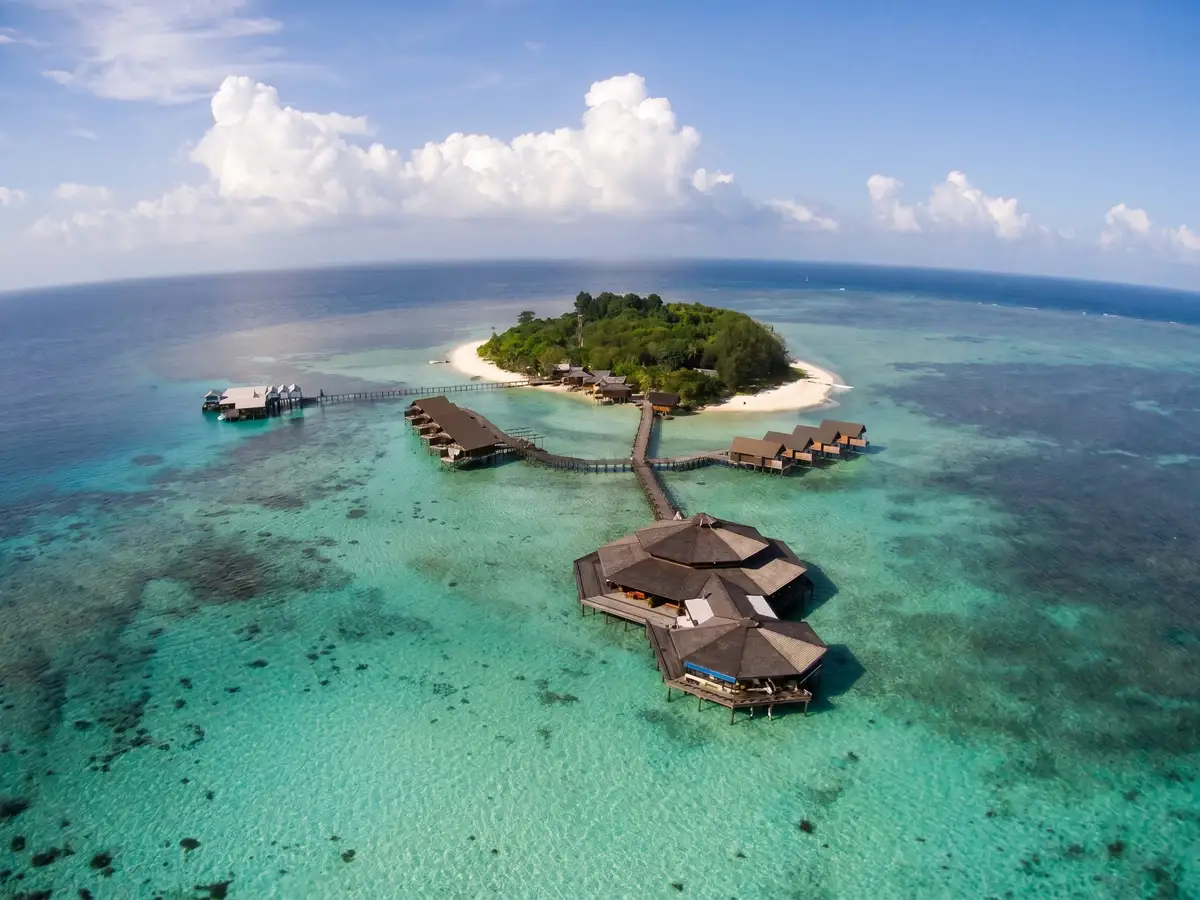
Lankayan's reefs are well-suited to all experience levels, including newly certified divers. Lankayan Island Dive Resort is the only property on the island and closes in January and February during the Northeast Monsoon. With a single resort and a firm seasonal closure, availability in the peak whale shark and turtle months is more limited than it appears. Check availability at Lankayan Island Dive Resort before planning around a specific season.
Tun Sakaran Marine Park
Tun Sakaran Marine Park spans the Semporna Archipelago at the entrance to Darvel Bay in the Celebes Sea, holding 528 species of reef fish and a global record of 44 mushroom coral species. Three of its eight main islands are the surviving rim of an ancient volcanic crater whose flooded caldera contains mesh reefs — dense polygonal networks of coral walls growing from the sandy seabed like the corridors of a submerged city. The southern islands range from muck diving to a rare Black Coral Garden at 22 to 35 metres at Mantabuan. The outer continental shelf islands of Mataking and Pom Pom sit beyond the park boundary: Mataking's deep pelagic channels bring mantas, hammerheads, and seasonal whale sharks; Pom Pom is the area's premier muck diving base with active coral restoration accessible to divers. The Bajau Laut — sea nomads who have free-dived these waters for centuries — live across the park's stilt villages.
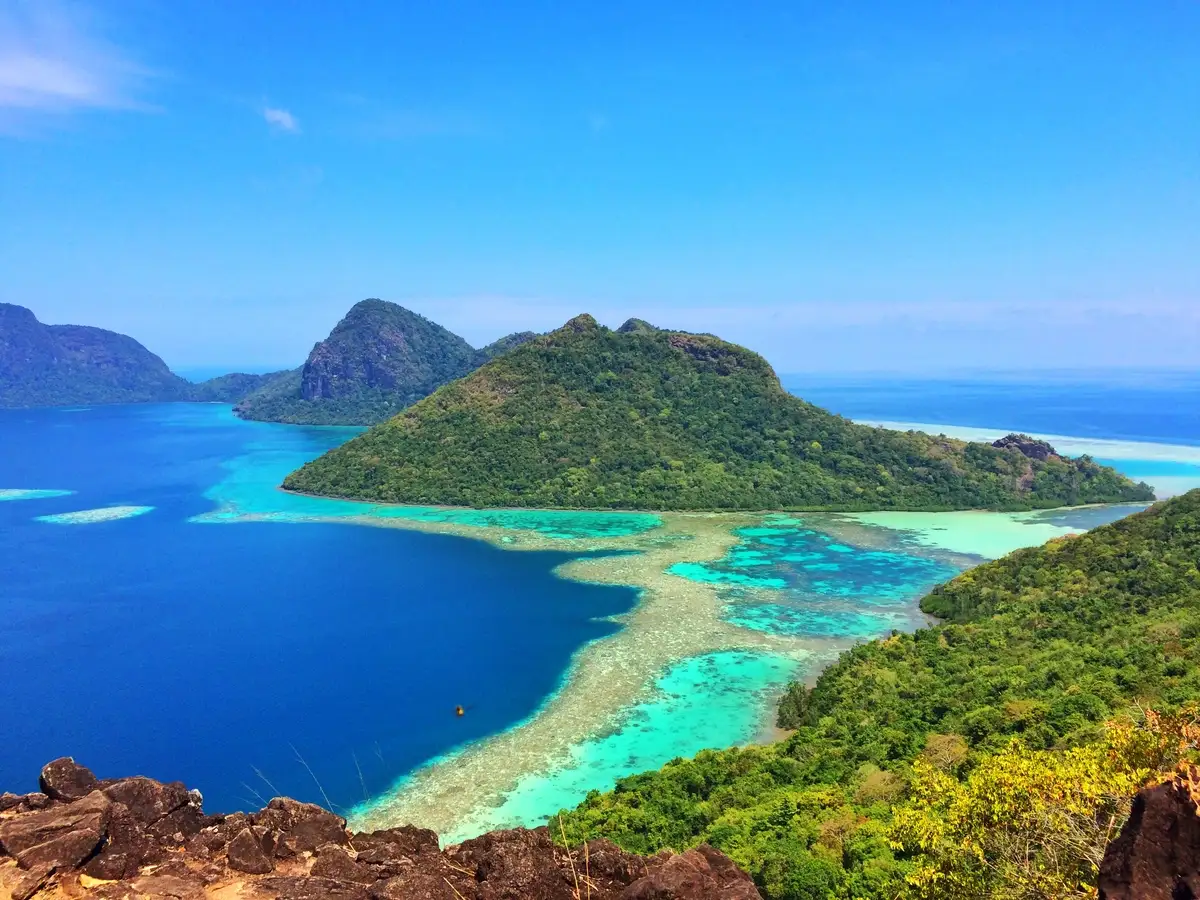
The mesh reefs and Mantabuan's Black Coral Garden are accessible to all experience levels. The outer channel pelagics at Mataking suit intermediate divers and above. Tun Sakaran is also the most flexible of the three destinations for combining with Sipadan; several resorts run day trips to both.
When to Visit
| Destination | Best season | Notes |
|---|---|---|
| Sipadan, Mabul & Kapalai | March–October | Sipadan closed throughout November; Mabul and Kapalai macro unaffected by season |
| Lankayan Island | March–October | Whale sharks March–May; turtle hatchlings June–September; closed January–February |
| Tun Sakaran Marine Park | March–May (peak); also July–September | Year-round diving; visibility 5–15m November–February |
Getting There
All three destinations are in Sabah, reached via Kota Kinabalu International Airport (BKI) — the main hub for international connections — or Tawau Airport (TWU) for the Sipadan and Tun Sakaran areas. For Sipadan and Tun Sakaran, Tawau is the closer option with a 90-minute overland transfer to Semporna; Kota Kinabalu is approximately four hours by road but connects to more international routes. For Lankayan, a domestic connection from Kota Kinabalu to Sandakan (under one hour) is followed by a 1.5-hour speedboat to the island. Most resorts arrange the full transfer as part of their packages; we can confirm what is included before you book.