Diving in Indonesia
Indonesia occupies the heart of the Coral Triangle, the six-nation region that holds the highest concentration of reef biodiversity on Earth. Its eastern archipelago spans a geological range that no comparable geography matches: ancient volcanic calderas, abyssal pelagic walls, nutrient-fed river bays, and volcanic muck channels, each sustaining a marine inventory as distinct as its geology.
The eastern provinces sit within Wallacea, the biogeographic transition zone between Asia and Australia where millions of years of evolutionary isolation have produced species found nowhere else on Earth: the psychedelic frogfish endemic to Ambon Bay, the walking sharks of South Halmahera and Triton Bay, the Mimic octopus first documented in Lembeh's volcanic sand. Indonesia's diving is built on genuine biological singularity, not simply on abundant reef life, and the right destination depends entirely on what kind of diving you are after.
Indonesia has far more dive destinations than any single trip can cover. The six areas on this page are the ones we know well enough to recommend from experience: we hold direct relationships with the resorts we work with there, and we have dived all of them.
East Kalimantan
Derawan Archipelago
Off the eastern coast of East Kalimantan, the Derawan Archipelago holds four entirely different dive experiences within a single itinerary. Maratua's outer walls drop into the Celebes Basin, over 4,000 metres of open ocean, concentrating chevron barracuda, thresher sharks, and eagle rays in high-velocity drift dives. Twenty minutes away, Kakaban's interior holds a landlocked lake whose jellyfish evolved in complete isolation to lose their sting. Sangalaki holds the largest green sea turtle nesting ground in Southeast Asia and year-round resident reef manta rays. Talisayan, near the mainland coast, offers pre-dawn whale shark encounters at traditional bagan fishing platforms.
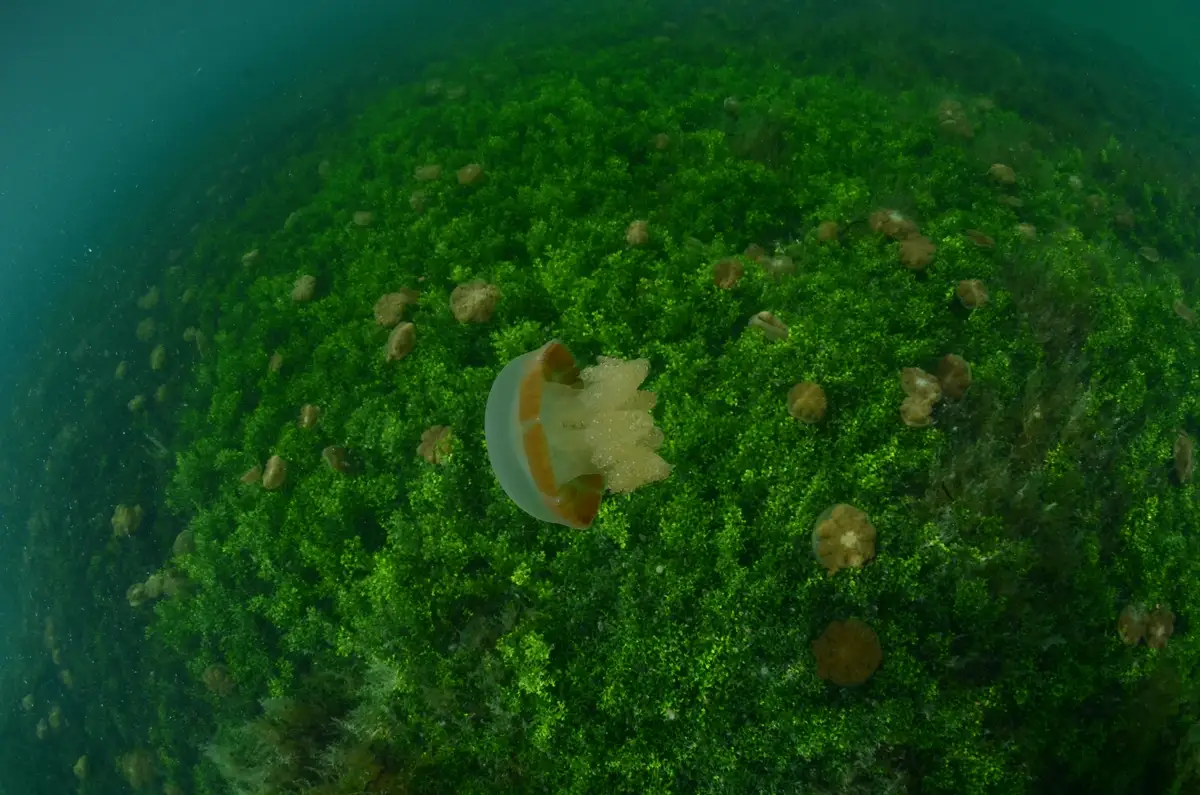
The outer wall drifts at Maratua suit intermediate divers and above; the protected sites on the atoll are accessible to beginners. Resorts are based on Maratua with day trips to all four sites, and most operate with 10 to 14 guests at any one time. The better weeks fill well in advance — see the resorts we work with in Derawan and check what is open for your dates.
North Sulawesi
Lembeh Strait
The Lembeh Strait is the destination that defined muck diving as a discipline, and remains its undisputed capital. A 15-kilometre volcanic channel between Lembeh Island and the port of Bitung, its seabed is dark volcanic sand, not coral reef, sustaining an estimated 1,100 species of marine life including more than 350 nudibranch species, eight frogfish species, and twelve octopus species. The Mimic octopus was first documented here and is most reliably found here.
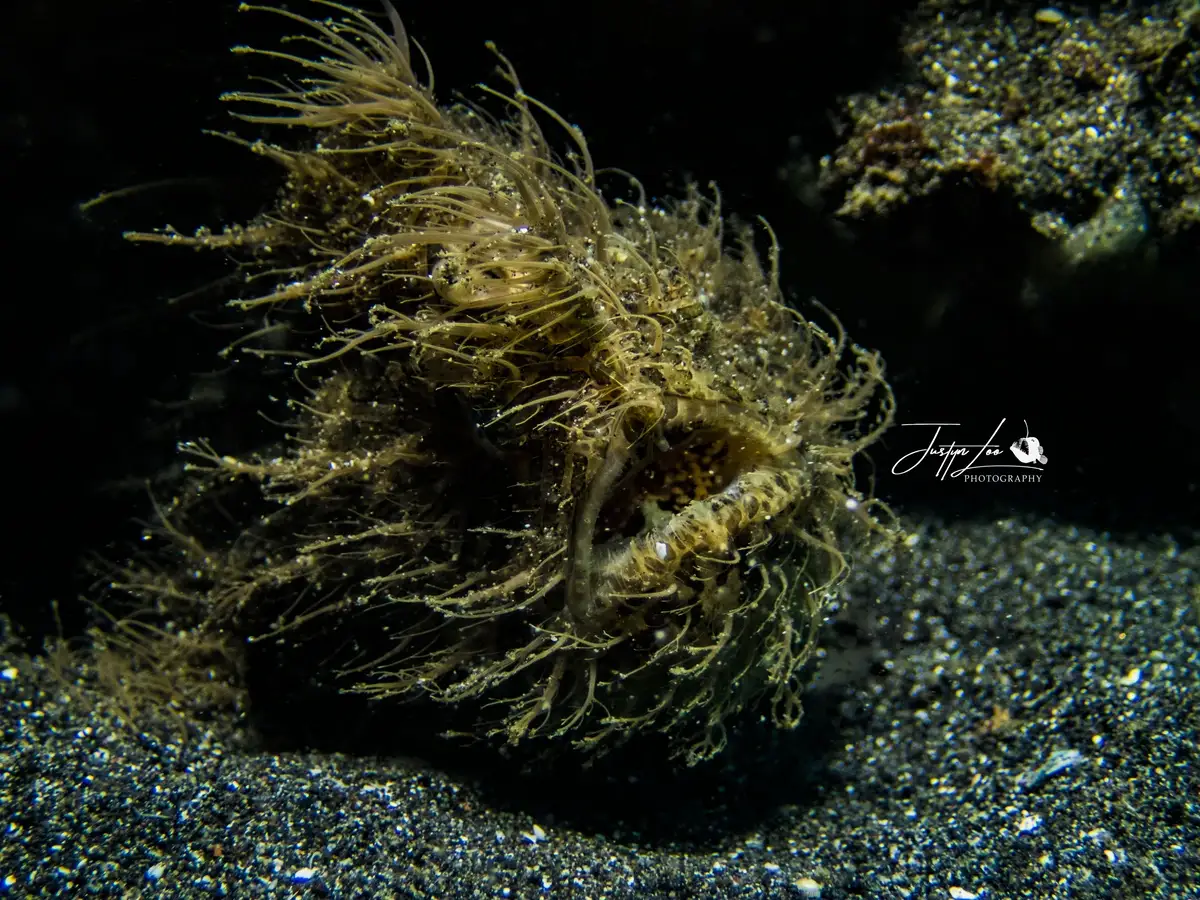
Because the channel carries almost no current, Lembeh works as well for newly certified divers as for experienced underwater photographers. The diving is methodical and close-focus; if you are after drift dives and open-water pelagics, this is not the right choice. Lembeh can be dived year-round. July to September brings cold upwellings and peak critter activity; November to February is warmer, less crowded, and equally productive for nocturnal species.
North Maluku
South Halmahera
South Halmahera lies within Wallacea, where evolutionary isolation has produced marine species found nowhere else on Earth. The Patinti Strait, constricted by a cluster of barrier islands, generates high-velocity tidal currents that concentrate grey reef sharks, eagle rays, and barracuda in drift dives timed to tidal change. Kusu Island operates as a private marine sanctuary with more than 3,000 fish species on its house reef. Sali Kecil's sheltered slope is one of the most reliable sites for night encounters with the Halmahera Epaulette Shark, a walking shark endemic to these waters. Whale sharks appear in the strait from October to December.
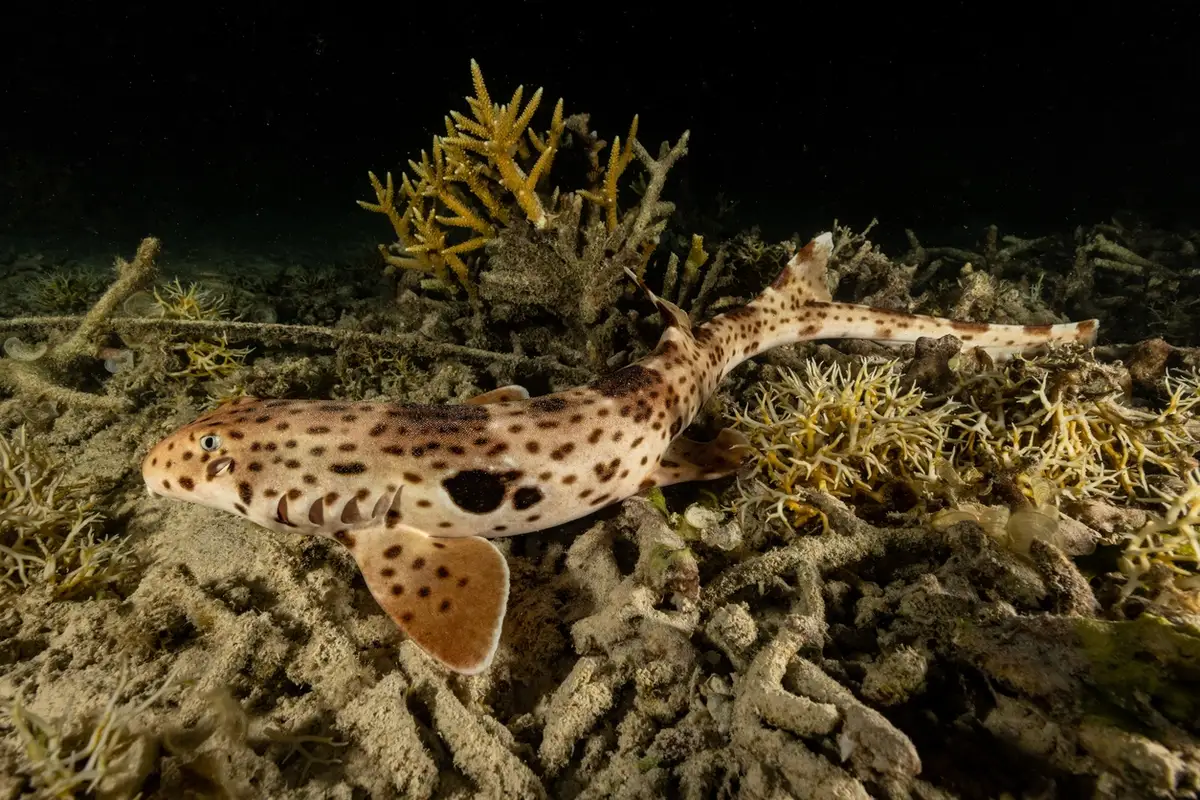
The current-driven sites in the Patinti Strait require comfort with drift diving; the house reef and night diving sites are accessible to all experience levels. October to December combines peak current diving with whale shark season, which makes it the most in-demand window. If you are planning around the whale sharks, check availability early — those months book out well in advance.
South Maluku
Ambon
Ambon contains two entirely distinct diving worlds within a single island. Ambon Bay, a sheltered inner basin of dark volcanic sand, is one of the world's most species-dense bodies of water: rare endemics including the psychedelic frogfish found only here, alongside Wunderpus, rhinopias scorpionfish, flamboyant cuttlefish, and mandarin fish at dusk. The bay's gentle conditions suit macro photographers at all experience levels.
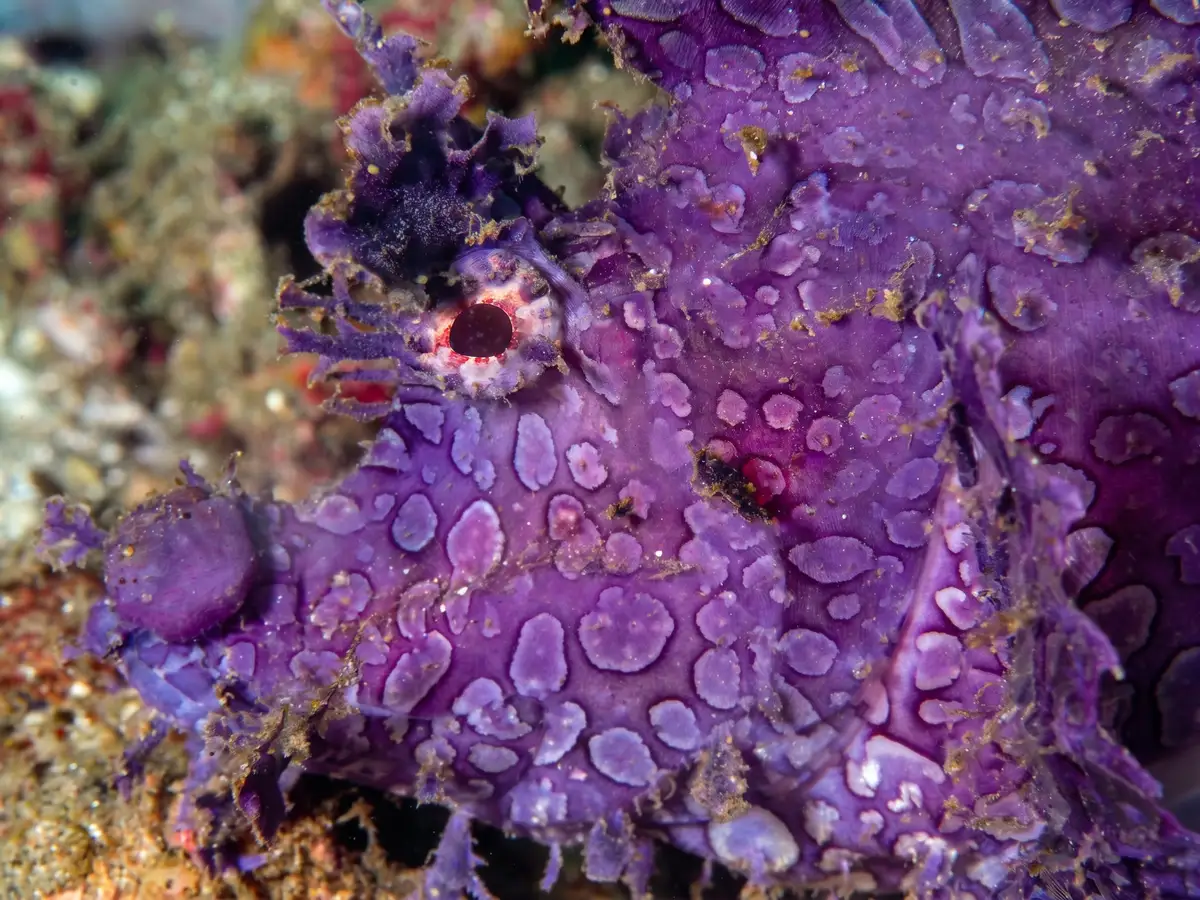
The outer coasts are a complete contrast: sheer volcanic walls, massive underwater arches at Hukurila Cave, and flashlight fish whose bioluminescence fills the cave interior with drifting blue-green light. The outer coast is better approached with some drift diving experience. Ambon is also the primary embarkation point for liveaboards operating through the Banda Sea; a week in the bay followed by a Banda Sea liveaboard is one of the more complete dive itineraries available in eastern Indonesia.
West Papua
Central Raja Ampat
Raja Ampat lies off the northwestern tip of West Papua and holds over 600 species of hard coral, approximately 75 per cent of all known to science. A single dive at Cape Kri holds the documented world record for fish species in one dive: 374. The Dampier Strait carries the Indonesian Throughflow between the Pacific and Indian Oceans, sustaining both the reef biodiversity and the migration corridors that bring reef manta rays, turtles, and cetaceans through the central islands year-round. After dark, the shallow reef at Batu Lima becomes hunting ground for the Raja Ampat Epaulette Shark, which walks across the seabed on its pectoral fins.
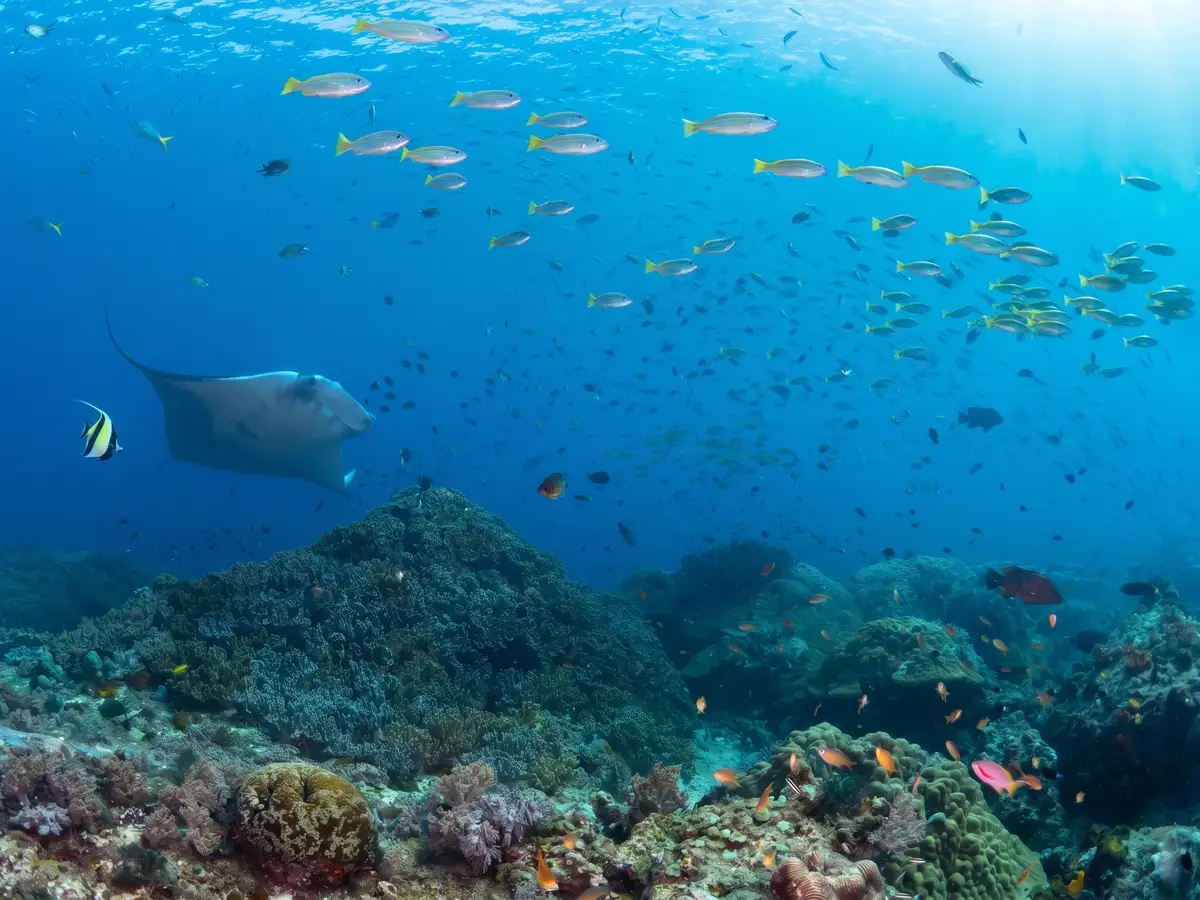
Most sites suit intermediate divers; the Dampier Strait current dives require experience reading tidal flow. October to April offers the calmest conditions and peak manta activity. The central Dampier Strait is open year-round, but resorts in the outer islands operate seasonally and the popular months fill faster than visitors typically expect.
Triton Bay
Triton Bay lies on the southern coast of West Papua in the Kaimana Regency, among the most remote dive destinations in Indonesia. The bay is fed by mainland rivers whose nutrients support an extraordinary density of soft corals, leather corals, and sea fans across more than 30 named sites. Surveying teams have recorded 330 species of fish on a single dive. Henry's Epaulette Shark, endemic to these waters, walks across the reef on its pectoral fins. Whale sharks gather reliably around traditional bagan fishing platforms in encounters that are predictable in a way that whale shark diving rarely is elsewhere.
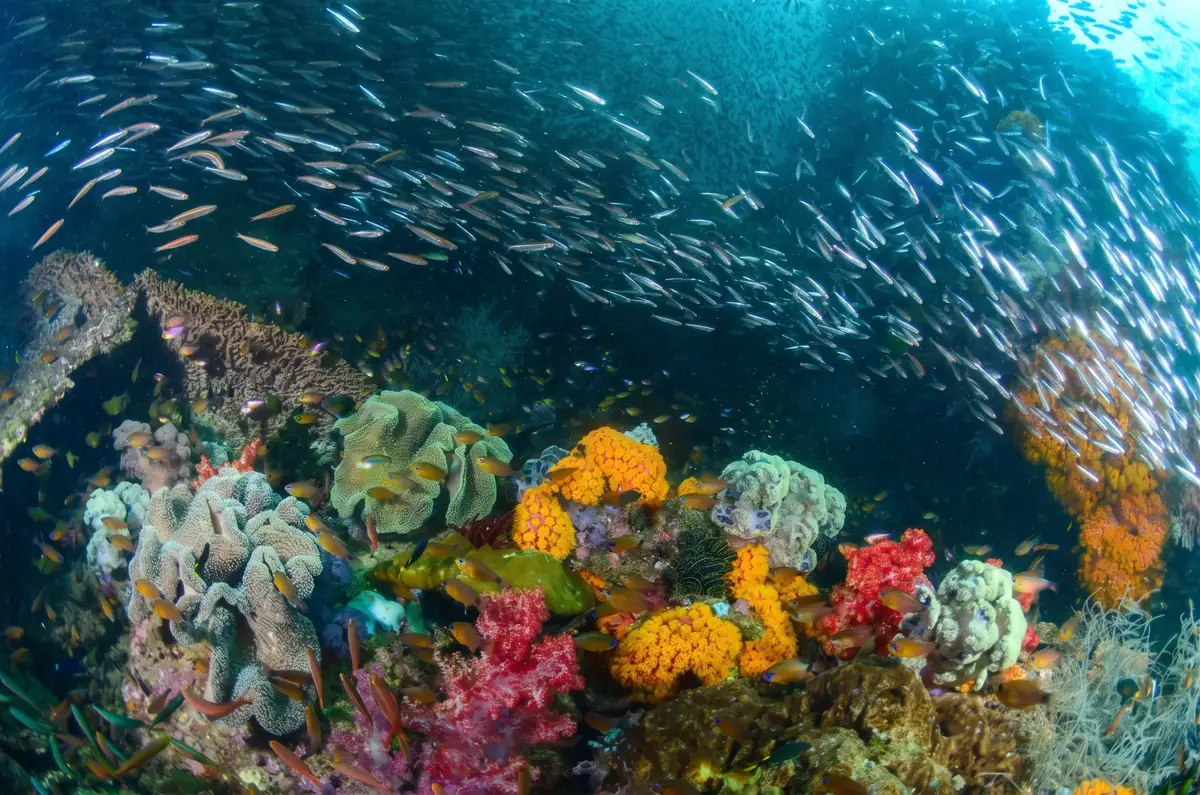
Visibility runs to 5 to 10 metres in the bay; Triton Bay rewards divers who place species density above clear water. Triton Bay has a hard seasonal closure and diving is not viable between June and September. The late-September reopening tends to fill quickly — see which Triton Bay resorts we recommend and check availability if you are planning for October.
When to Visit
| Destination | Best season | Notes |
|---|---|---|
| Derawan Archipelago | March–October | Peak June–August; wet season reduces visibility at mainland sites |
| Lembeh Strait | Year-round | Peak critter activity July–September; warmer and quieter November–February |
| South Halmahera | June–October | Whale sharks October–December; sheltered sites diveable year-round |
| Ambon | October–April | Outer coast closes May–October; bay sites diveable year-round |
| Central Raja Ampat | October–April | Peak mantas November–March; central Dampier Strait open year-round |
| Triton Bay | Late September–early June | Hard closure June–September; no marginal diving period |
Getting There
Indonesia's main international hubs are Jakarta (CGK) and Bali (DPS), with connections from most major Southeast Asian cities. All six destinations require domestic onward flights: Sorong (SOQ) for Raja Ampat, Kaimana (KNG) for Triton Bay, Manado (MDC) for Lembeh, Ambon (AMQ) for Ambon, Berau (BEJ) or Tarakan (TRK) for the Derawan Archipelago, and Ternate (TTE) or Labuha (LAH) for South Halmahera. Several routes pass through Makassar or Manado and require an overnight layover; build a full day of domestic travel into any itinerary.
If you are combining two destinations, some routings are straightforward and others involve doubling back through Jakarta. We can work out the logistics around your travel dates.